
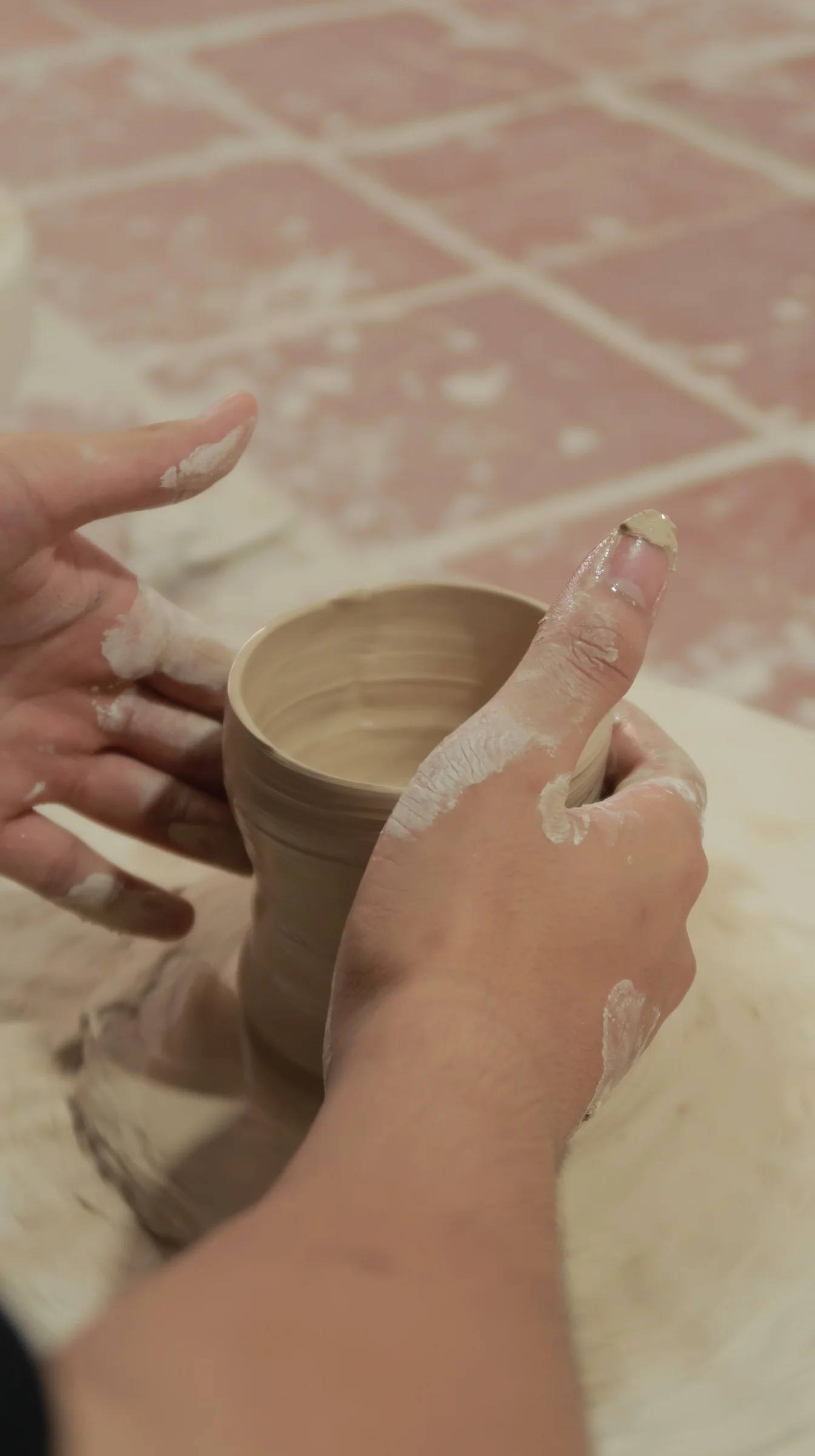
I went out to Bat Trang on a free afternoon, no list, no camera, and stayed until the light went. What stayed with me was not any single bowl. It was the sound of a hand passing over a spinning block of clay, and the way nobody in the yard treated the work as precious. It was simply work, done well, by people who had been doing it for years.
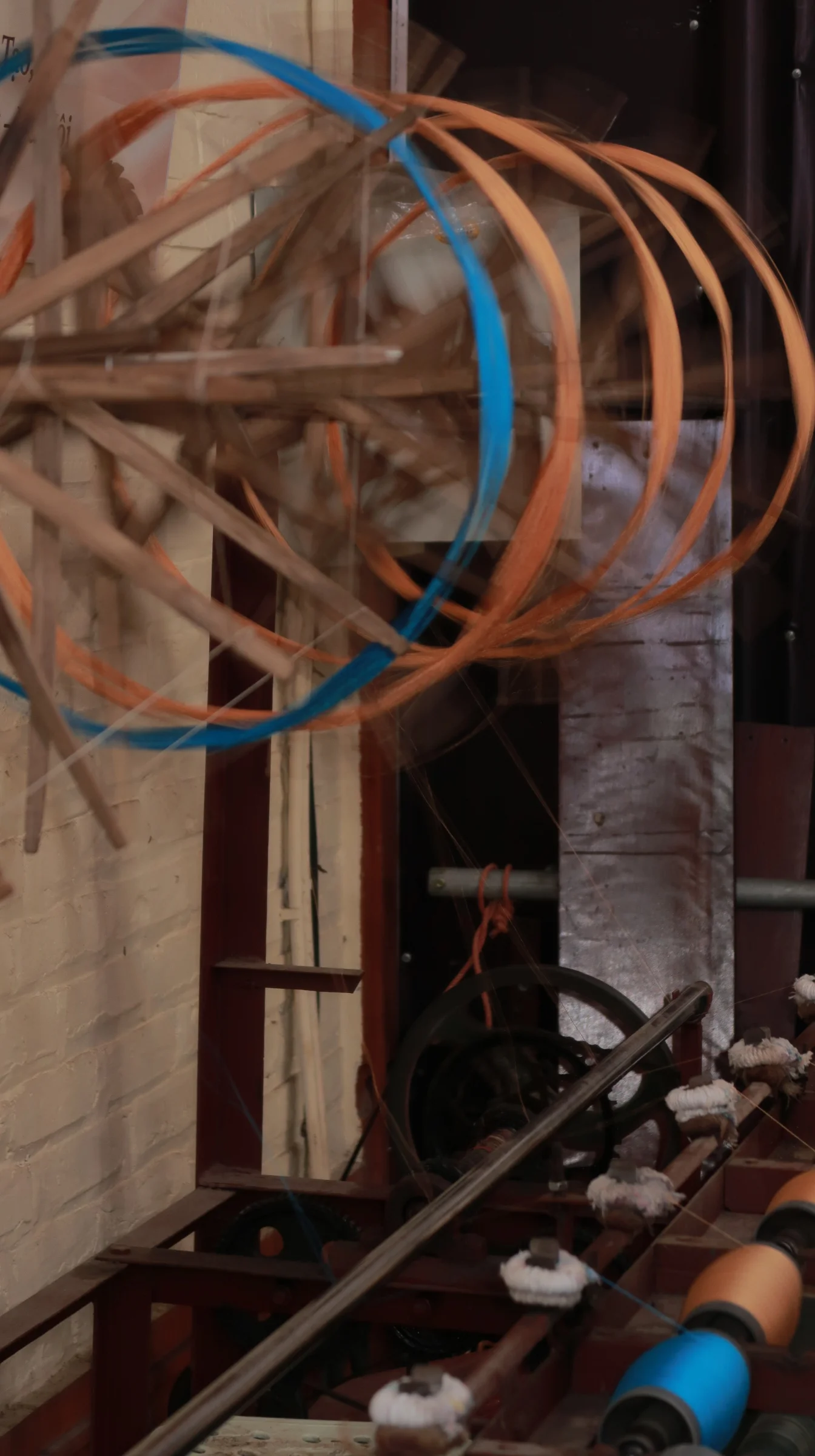
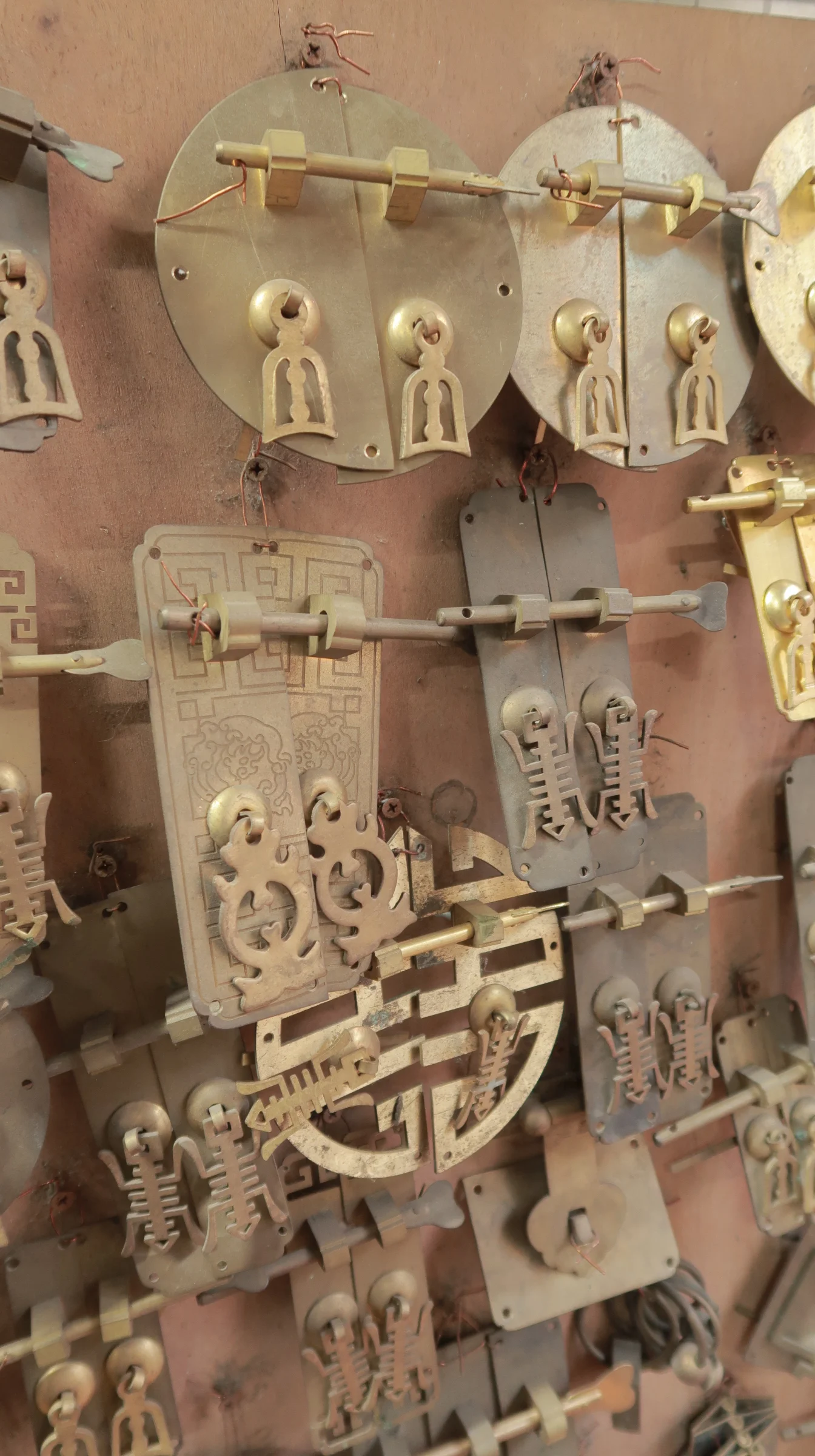
That season took me to Van Phuc, where silk comes off the loom in a room loud enough to drown out conversation, then to Phu Vinh, then to the bronze row on Hang Dong, where you hear the workshop before you turn the corner. Each place told me the same thing in almost the same words: the craft is fine, the young people are not buying it.
So the question stopped being how to save any of this, and became how to re-cut it. I wanted the material, the technique and the hands to stay exactly where they were, and only the form to change. A bowl does not leave the house. An earring does. I made a first collection in brass, silk, ceramic and rattan, listed it on a small website, and the orders arrived faster than I was ready for.
.
 |
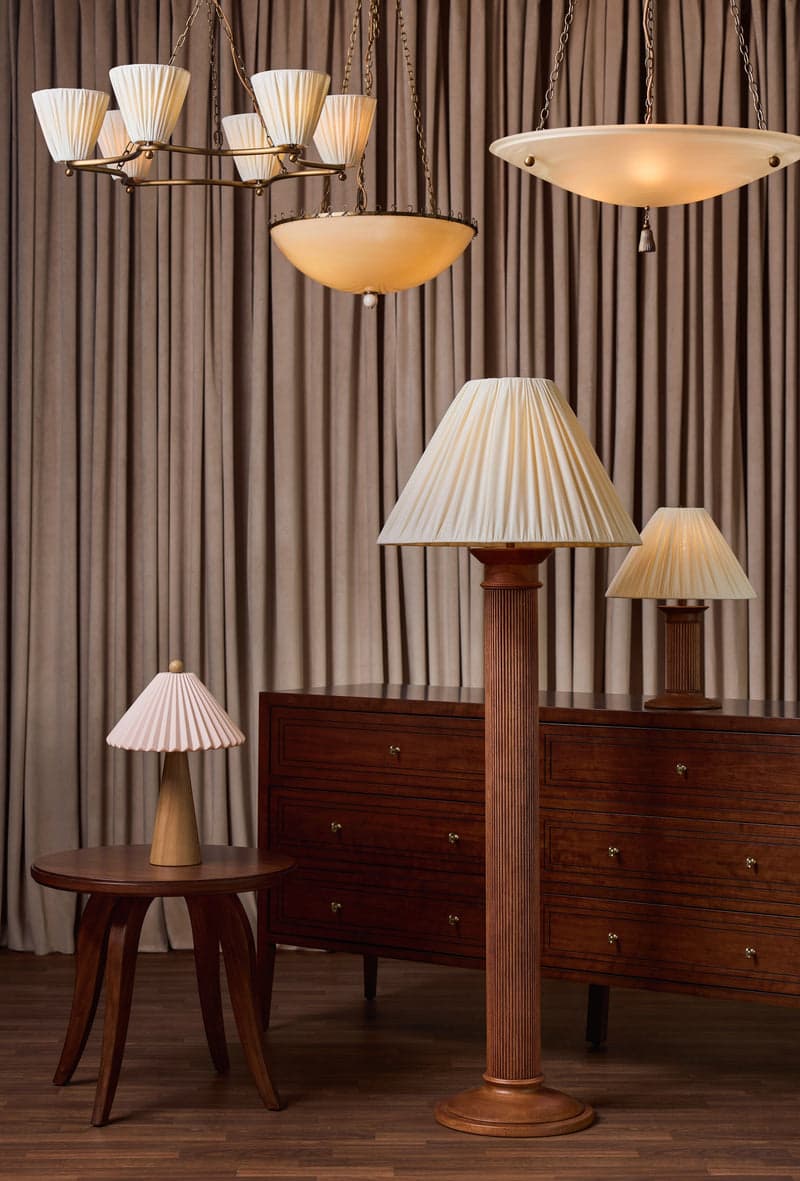
| 【FIG 01.】The making of a Betty Sconce. |
The Name
Ornam is a word built from two halves.
The first is ornament, an old word that has fallen out of fashion and deserves better. An ornament is made to be looked at closely, kept, and eventually handed down. The second half is Nam, for Viet Nam. Read together, Ornam means Vietnamese ornament, which is exactly what each piece is.
That reading matters to me because ornament is usually filed as a lesser category, decoration rather than design. What I found in the villages was the opposite. A glaze that survives a century of washing, a weave that holds its shape after decades of use, a bronze joint that needs no nail: these are engineering decisions, made by hand, one household at a time.
So Ornam is not selling accessories. An accessory completes an outfit. These pieces carry authorship. One necklace can pass through four workshops before it reaches you, and each of those workshops leaves something in it that I never designed. You are wearing the decisions of a potter, a weaver, a rattan maker and a caster at the same time. That is the part I refuse to simplify out of the description.
Its Beauty
The beauty is easy to argue in the finish: an edge that catches light, a glazed surface that is never quite the same blue twice. It is harder to see what the order does after it leaves the shop.
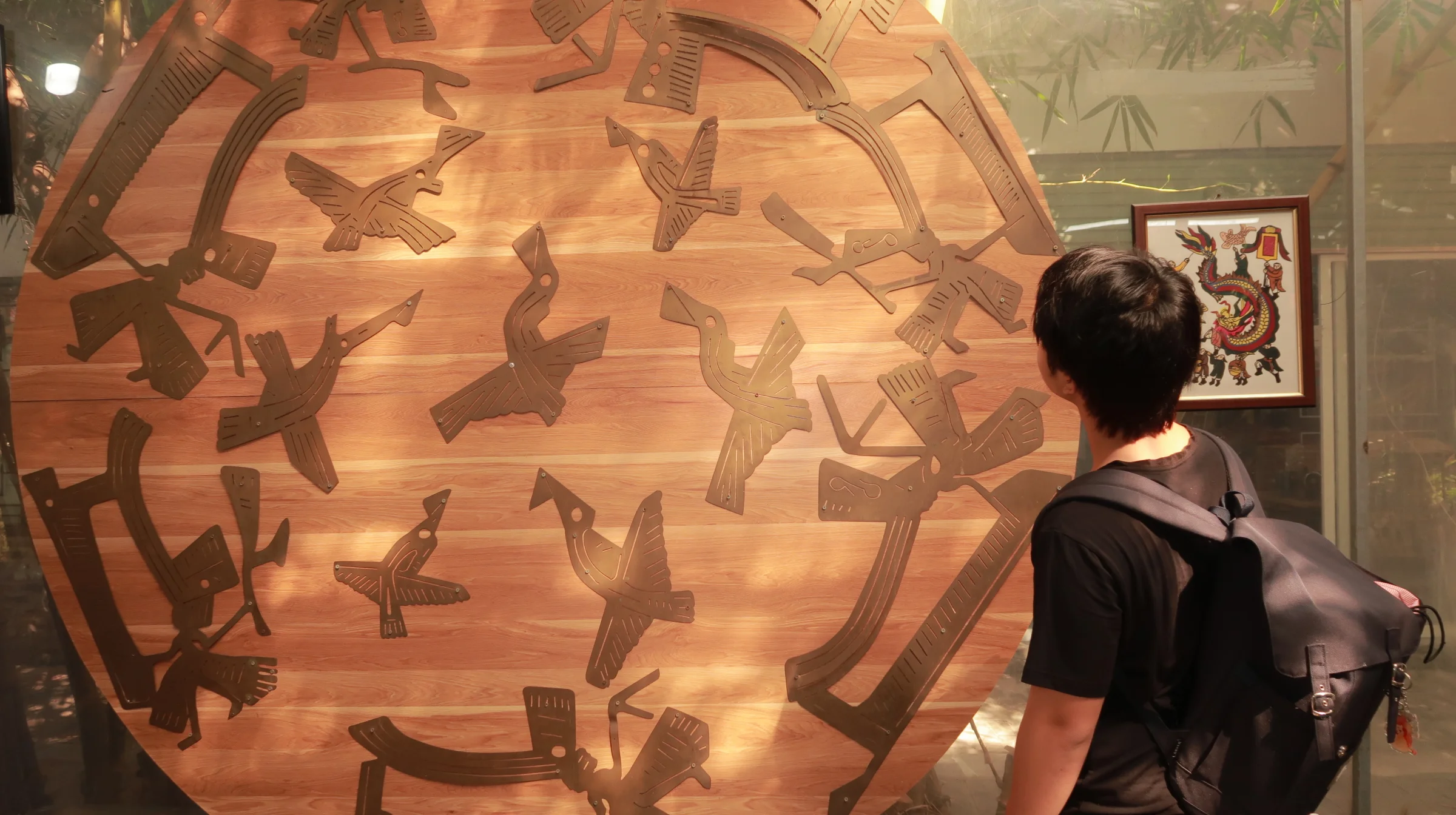
What I did not expect was how quickly the money changed the mood of a household. Some workshops brought in enough to keep a storefront open for another year. Some artisans used the momentum to start their own lines, which was never part of my plan and is the outcome I am proudest of. The one that still catches me is the children: sons and daughters who had grown up assuming the trade would end with their parents, now learning the work in order to help fill orders.
That is where the beauty actually sits. Not in a product photograph, but in a family deciding the skill is worth passing on, because a customer somewhere else asked for it.
What's Next
.
Ornam is small. It is not going to reopen every workshop in Hanoi. But attention is something a brand can move, and the villages were never short of skill, only of people looking. If a piece of jewellery can carry a craft village into a conversation between strangers, then it has done more than decorate someone.
Thank you for being here, for supporting a small independent studio, for believing in slower craftsmanship, and for allowing this little idea I started years ago to become something far bigger than I ever imagined.
Welcome to the world of Ornam
We're so glad you're here.
Binh xx